Homosexuals’ Exposure to Blackmail
My PolicemanHomosexuals’ Exposure to Blackmail is the condition of vulnerability created when same-sex relationships can be used to threaten, extort, and expose the people involved. The account makes that vulnerability concrete through Patrick Hazlewood’s recollection of Michael: an anonymous demand for money, a futile attempt to confront its source, a payment made under pressure, and a second demand followed by Michael’s suicide. The identity of the blackmailer remains unknown, so the threat is frightening not only for what it takes but for how little can be done to resist it.
The conditions of exposure
The account places blackmail within a world in which gay men form relationships and seek company while needing to guard against disclosure. Patrick describes the social venues around the Argyle as offering quicker pleasures, but also as spaces of competition, where men watch and position themselves in relation to one another. He prefers the prospect of a friendship with Tom Burgess and describes his own approach as a long game: an effort to avoid frightening Tom away while offering him something he wants. His preference for a slower, more personal bond contrasts with the risks that attach to less protected encounters. The passage does not say that the venues themselves cause blackmail; it shows instead that discretion and the possibility of exposure shape the social landscape in which intimacy takes place.
Michael’s home life initially appears to offer a measure of privacy. His widowed landlady, Esme Owens, lived downstairs, asked no questions, knitted socks for the poor, and made him fish pie on Fridays. Michael regarded her as discreet. She had seen much during the war and seemed difficult to shock. Patrick believed she must have noticed how often he visited and may have wondered why Michael was away every Wednesday night. Her silence had practical value: Michael could maintain a private relationship without having to explain it to the person sharing his household. But discretion does not establish trust, and the account later makes that apparent uncertainty part of Patrick’s memory.
The extortion of Michael
The first letter was blunt: it claimed that Michael had been seen at Plummer Rodis with a rent boy and demanded five pounds in exchange for silence. Patrick recalls that he and Michael reacted with indignation and went together to the address in West Hove on a Sunday afternoon. They had no plan and no clear idea of what they could do. After walking past the house several times, they found it empty. The empty address did not lead them to a person they could confront; it made the threat feel faceless. Patrick and Michael went home in silence, with no visible adversary and no practical way to challenge the demand.
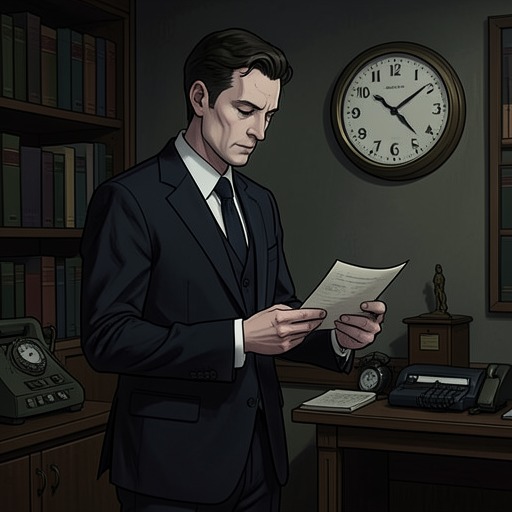
Patrick tried to dissuade Michael from paying. He nevertheless understood why Michael felt he had no choice, and saw his own objection as an attempt to speak against a decision that fear had already narrowed. Michael sent the money, then refused to discuss the matter further. The payment bought no lasting safety. Some weeks later, Patrick found another note in Michael’s flat, and the price of silence had doubled. Within two months of the first letter, Michael had killed himself. The sequence is stark: a demand backed by threatened exposure, payment, renewed extortion at a higher price, and a death. The account does not claim that the letters were the sole cause of Michael’s suicide, but it places their escalation immediately before it and makes the devastating consequence unmistakable.
Suspicion without proof
Patrick continues to wonder who wrote the letters. Michael had said that no one they knew was responsible and had guessed that a professional outfit made its living blackmailing homosexuals. That explanation remains Michael’s supposition, not a confirmed identification. The empty West Hove house deepens the uncertainty: the men find no person to question, and the narrative supplies no later discovery of the authors. Their inability to see or reach the source is central to the menace. The extortion operates through the risk of disclosure, while withholding the identity of the person making the threat.
Patrick also looks back at Esme Owens’s conduct after Michael’s death. At the funeral, she wore a fur stole that appeared very expensive and seemed more distraught than Patrick thought necessary for a landlady. These details lead him to wonder about her discretion, but they do not prove that she wrote the letters or had any part in the blackmail. The account preserves that distinction between suspicion and knowledge. The landlady who had appeared to protect Michael’s privacy becomes, in Patrick’s recollection, another unresolved possibility—not a solved culprit.
Social and legal vulnerability
Elsewhere, the narrative shows how exposure can have consequences beyond a private demand for money. A major scandal breaks in the papers over the Brighton Criminal Investigation Department: the Chief Constable and a detective inspector face conspiracy charges. Patrick feels a moment of satisfaction that senior police figures are facing public disgrace, then worries that ordinary, honest officers will bear the pressure created by their superiors’ alleged misconduct. His immediate concern is Tom, a policeman whose return he must wait for. The episode does not connect the scandal’s charges to Michael’s blackmail, but it places their private fears in a society where policing itself is under scrutiny and where public disgrace carries weight.
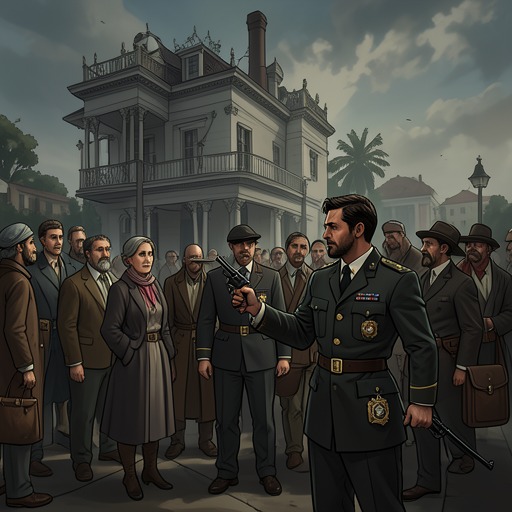
The trial of Patrick Hazlewood later exposes another dimension of that vulnerability. Before proceedings begin, the public gallery is warned that the case will contain material deemed offensive to ladies; every woman leaves. Laurence Cedric Coleman gives evidence against Patrick, and Patrick interprets his claim as an attempt to escape trouble of his own. During Marion Burgess’s testimony, the prosecution puts to her that Patrick had an indecent relationship with her husband, Tom Burgess, and asks whether she denies that Patrick is homosexual. These courtroom events are not shown as part of Michael’s extortion, but they demonstrate how intimate conduct can be made public and turned into an accusation before an audience and a court.
The pattern running through the account is therefore not simply the loss of money. A threat works because the people targeted have reason to fear what disclosure could bring; paying does not remove that vulnerability, and silence leaves them isolated from help. Michael’s refusal to discuss the letters, Patrick’s inability to identify their author, and his later doubts about Esme all leave essential knowledge out of reach. By ending the recollection with a death and an unanswered suspicion, the narrative presents blackmail as a coercive condition sustained by secrecy and uncertainty, with consequences that outlast the demand itself.